5 Signs Your Phoenix Home Needs Exterior Painting
Learn to recognize the telltale signs that your home's exterior needs repainting before Arizona sun damage gets worse.
John Claude Painting
Family-owned Phoenix painting since 2005
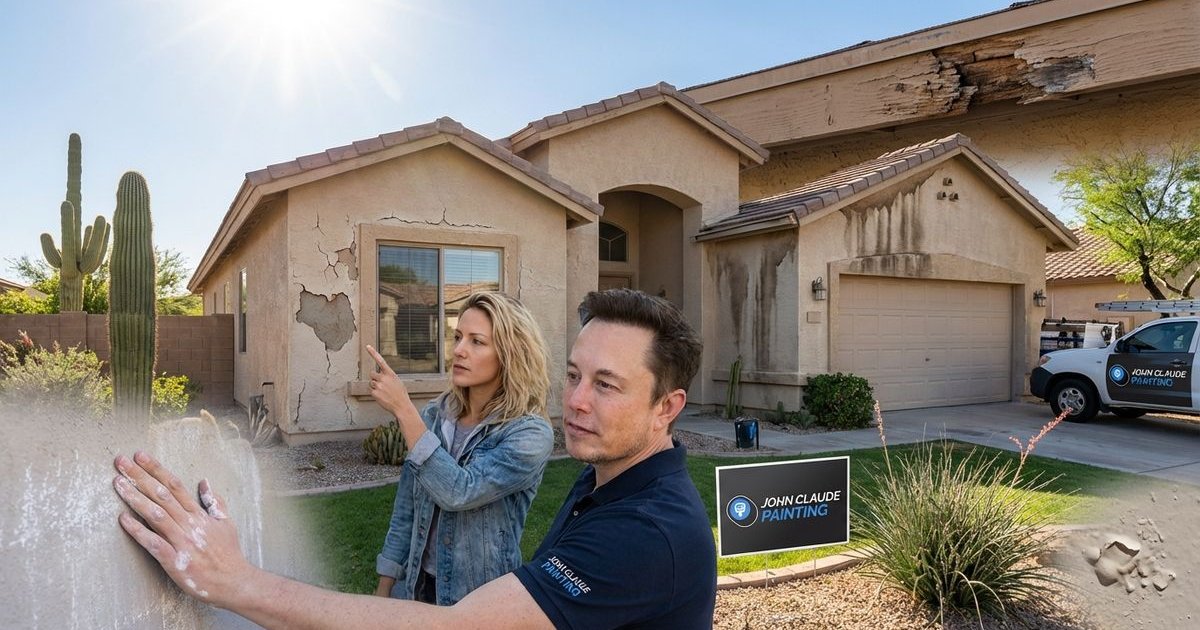
Arizona’s intense sun and extreme temperatures are relentless on your home’s exterior. Knowing when to repaint isn’t just about aesthetics—it’s about protecting your investment before damage becomes expensive to repair. Here are the five key signs that tell you it’s time to call a professional painter.
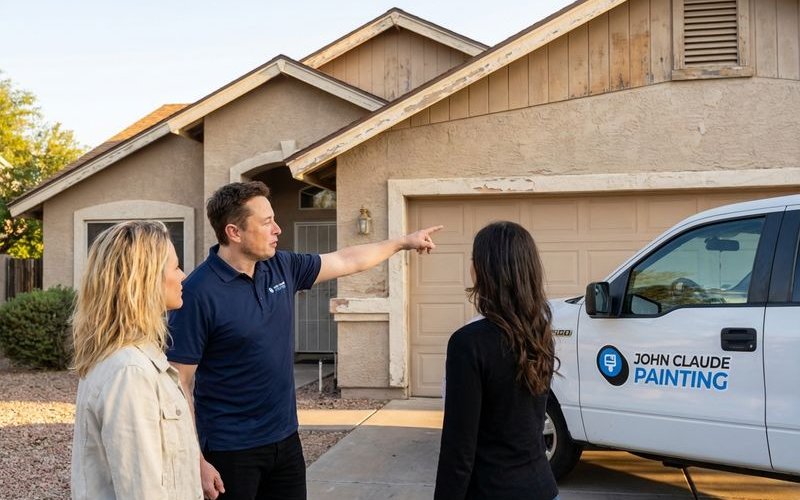
You know how builder-grade paint looks fantastic for exactly two years before it starts to look tired? From what we’ve seen across the Valley, that timeline is accelerating. The 2025 weather data confirms Phoenix just had its second-warmest year on record, meaning your home’s exterior is taking a beating like never before.
We see this constantly in neighborhoods from Ahwatukee to Chandler. The standard “contractor special” paint job just can’t handle 3,800 hours of annual sunshine.
Let’s look at the specific data points and physical signs that indicate your paint has stopped protecting your home and started costing you money.
1. Fading and Color Loss
What to Look For
Walk around your house and compare different sides. In Phoenix, south and west-facing walls fade faster due to direct sun exposure. You might notice:
- Dramatic color difference between shaded and exposed areas
- Overall washed-out appearance
- Colors that no longer match your original choice
The “LRV” Factor
Fading is often a result of choosing a color with a high Light Reflectance Value (LRV) without the right chemical formulation. Many HOAs in Ahwatukee and Gilbert now enforce strict LRV limits (often requiring a value below 40) to reduce glare, but darker colors absorb more heat.
We recommend using high-performance acrylics like Dunn-Edwards Evershield for these darker shades. This specific product line uses advanced UV-resistant pigments designed to hold color in desert conditions far longer than standard latex paints.
Why It Matters
Fading isn’t just cosmetic. It indicates that UV radiation is breaking down the paint’s protective resins. Once this protection fails, damage accelerates rapidly.
The Test
Compare your walls to a protected spot (under eaves or behind fixtures). If there’s an obvious difference, your paint’s protective qualities are diminished.
2. Chalking
What to Look For
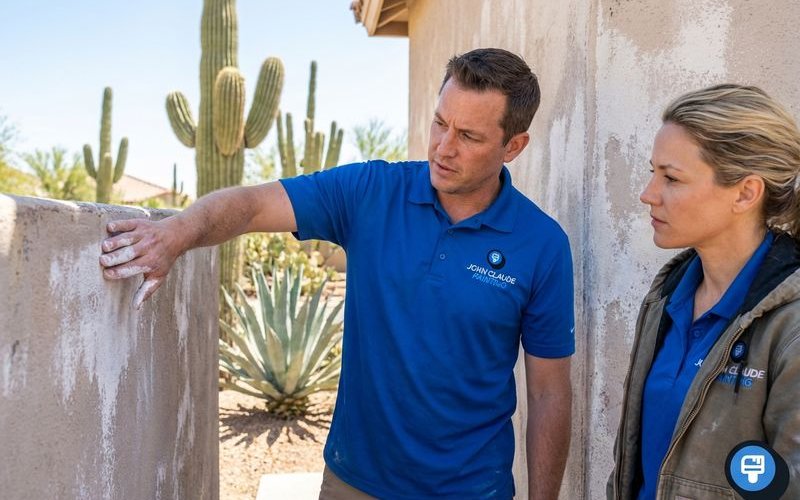
Run your hand along the painted surface. If it comes away with powdery residue that matches your paint color, you have chalking.
The “Black T-Shirt” Test
For a clear answer, rub a black cloth or t-shirt against a sun-exposed wall. If it comes away looking like you erased a chalkboard, the resin system in your paint has completely failed. This powder prevents new paint from adhering, which is why simply painting over it often leads to peeling within a year.
Why It Happens
Arizona’s UV exposure breaks down the binders in paint, releasing pigment particles as fine powder. Chalking indicates the paint film is degrading.
Severity Levels
- Light chalking: Normal wear, but monitoring needed
- Moderate chalking: Plan for repainting soon
- Heavy chalking: Immediate attention required
Why It Matters
Chalked surfaces won’t hold new paint properly. The chalking must be thoroughly cleaned before repainting, or the new paint will fail prematurely.
3. Peeling, Cracking, or Flaking
What to Look For
- Paint lifting away from the surface
- Cracks in the paint film (alligatoring pattern)
- Chips and flakes missing from surfaces
Common Locations
In Phoenix homes, check:
- South and west-facing walls (most sun exposure)
- Areas around windows and doors
- Wood trim and fascia
- Stucco repairs that weren’t properly primed
Wood Fascia Vulnerability
Wood trim in Gilbert and Chandler homes is particularly susceptible because wood expands and contracts at a different rate than stucco. We often see fascia boards peeling years before the main body of the house. This exposes the raw wood to dry rot and termites, turning a $500 paint touch-up into a $2,000 carpentry bill.
Why It Happens
- Temperature cycling causes expansion/contraction
- Moisture infiltration under paint
- Poor preparation in previous paint job
- Paint applied too thick or in wrong conditions
Why It Matters
Once paint starts peeling, underlying surfaces are exposed to:
- Direct UV damage
- Moisture infiltration
- Accelerated deterioration
- Potential structural damage
This is urgent—don’t wait to address peeling paint.
4. Stucco Cracks and Damage
What to Look For
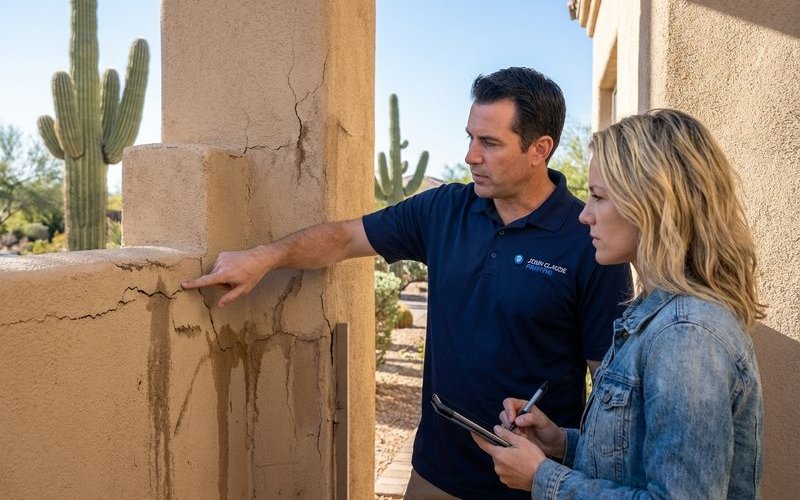
- Hairline cracks (often just surface deep)
- Larger cracks or splits
- Crumbling stucco edges
- Areas where stucco has separated from the wall
The “Thermal Shock” Effect
Phoenix temperatures can swing from 110°F in the day to 80°F at night. This rapid thermal expansion and contraction causes what we call “thermal shock” cracking, especially on parapet walls (the flat tops of your roofline).
We treat any crack wider than 1/16th of an inch as a structural concern, not just a cosmetic one. These gaps require an elastomeric patch—a flexible compound that moves with the wall—rather than simple caulk which will harden and pop out next summer.
Phoenix-Specific Issues
Our soil movement and foundation settling creates stress cracks. Monsoon moisture can then penetrate these cracks, causing:
- Internal moisture damage
- Mold growth potential
- Expanded cracking from freeze-thaw cycles (yes, even in Phoenix winters)
Why It Matters
Paint alone won’t fix stucco damage. Proper repair is essential before painting—otherwise, cracks will telegraph through new paint within months.
Our prep-heavy methodology includes stucco repair before any painting begins.
5. Mold, Mildew, or Staining
What to Look For
- Dark spots or streaks (often on north-facing walls)
- Green or black growth
- Water staining below windows or rooflines
- Rust stains from metal fixtures
Efflorescence vs. Mold
Homeowners often mistake white, powdery deposits on their stem walls (foundation) for mold. This is actually efflorescence—mineral salts left behind when water evaporates.
You can tell the difference with a simple water test. Spray the area with water; if the white powder dissolves, it’s efflorescence. If it stays, it’s likely mildew or mold. Efflorescence usually points to hard water from your irrigation system hitting the house, a common issue in Phoenix landscaping.
Arizona-Specific Concerns
While we’re dry most of the year, our monsoon season creates conditions for mold growth:
- Evaporative coolers create moisture
- North walls stay damp longer
- Landscaping irrigation splashes on walls
Why It Matters
Mold and mildew indicate moisture problems that must be addressed before painting. Paint over mold, and it will continue growing underneath, causing the new paint to fail.
The Proactive Approach
Don’t wait for all five signs to appear. Addressing issues early:
- Costs less than major repairs
- Protects your home’s structure
- Maintains property value
- Prevents cascading damage
Cost Comparison: Paint vs. Repair
The numbers tell a clear story. A typical exterior repaint in Phoenix might cost between $2.00 and $4.00 per square foot. However, if you ignore the signs and allow stucco to fail, repair costs can easily exceed thousands of dollars before a drop of paint is even applied. Protecting the shell of your home is consistently the higher-ROI choice.
What to Do When You See These Signs
Self-Assessment
Walk your home’s exterior every few months, especially after monsoon season. Document issues with photos.
Professional Inspection
A professional assessment identifies problems you might miss and provides accurate repair and painting estimates.
Timing Considerations
In Phoenix, the best exterior painting seasons are:
- Spring (March-May): Before extreme heat
- Fall (October-November): After monsoons, before cold
How We Address These Issues
At John Claude Painting, we don’t just paint over problems. Our process includes:
- Thorough Inspection: We identify all underlying issues
- Stucco Repair: Fix cracks and damage before painting
- Surface Preparation: Clean, prime, and prep all surfaces
- Quality Application: Premium paints applied properly
- Final Inspection: Ensure complete, lasting results
The Loxon Solution
We rely heavily on Sherwin-Williams Loxon Primer for conditioning chalky or aging stucco. This specific primer is engineered to penetrate the surface and bond loose particles, creating a stable foundation that ensures your topcoat lasts for 10+ years rather than five.
Get Your Free Assessment
Notice any of these signs on your Phoenix home? Contact us for a free exterior assessment. We’ll honestly evaluate your home’s condition and provide a detailed estimate for any needed repairs and painting.
Protect your home before minor issues become major expenses. Our exterior painting services include comprehensive prep work and stucco repair. Call John Claude Painting today.
Topics:
Found this helpful?
Share this article with friends or neighbors who might benefit from these insights.