Best Interior Paint Colors for Phoenix Homes in 2026
Discover the top interior paint color trends for Arizona homes this year. From cool neutrals to warm earth tones that complement Southwest living.
John Claude Painting
Family-owned Phoenix painting since 2005
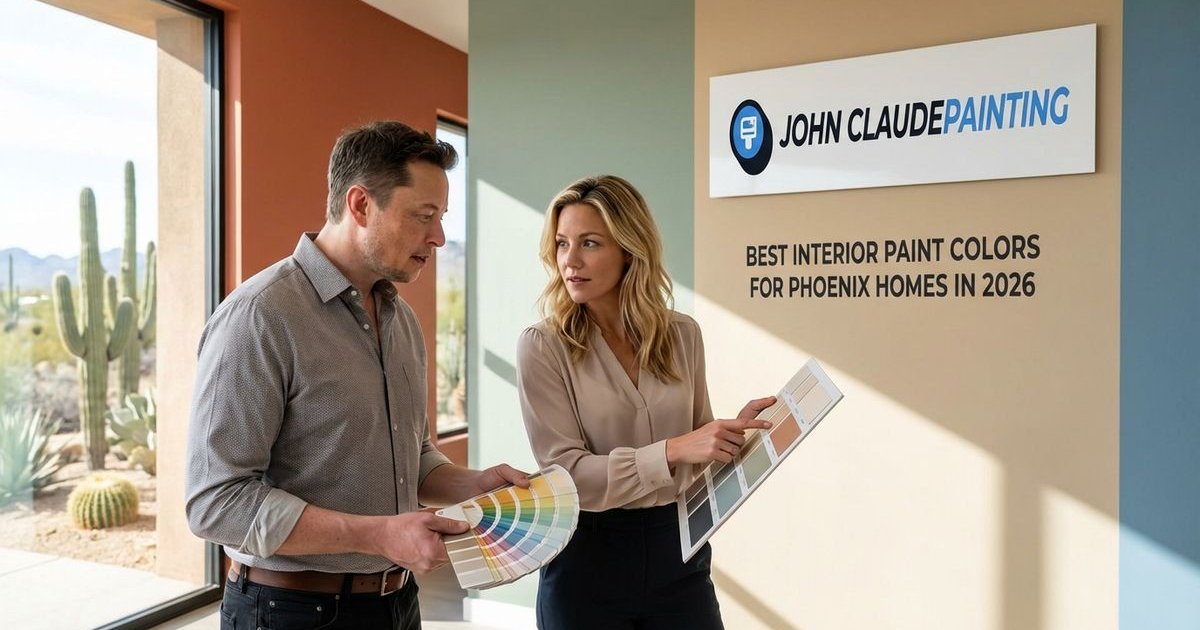
The days of “builder beige” are long gone, and the “gray everywhere” era is finally fading in the Valley. If you’ve been tracking the 2026 design forecasts, you’ve likely noticed a massive shift toward what Sherwin-Williams calls “Sunbaked Hues”—and honestly, they couldn’t be more perfect for us here in Phoenix.
We’ve seen firsthand how a color that looks stunning in a Seattle showroom can fall flat in an Ahwatukee living room. The difference isn’t just taste; it’s physics.
In this guide, we’re cutting through the national hype to give you the specific, road-tested colors that actually work in our intense Sonoran light. We’ll look at the data behind Light Reflectance Values (LRV), the exact shades that modernize those common travertine floors, and the 2026 trends that will keep your home looking current for years to come.
Understanding Arizona’s Unique Light
You might be surprised to learn that the biggest mistake homeowners make isn’t picking the wrong color, but picking the wrong reflectance.
In Phoenix, we deal with a unique lighting challenge. Our sunlight isn’t just bright; it has a high Kelvin temperature that can wash out subtle colors by midday and turn them incredibly warm by sunset.
The “LRV Sweet Spot” for the Valley
Light Reflectance Value (LRV) is a measurement from 0 (black) to 100 (pure white) that tells you how much light a paint reflects.
- The Trap: In other parts of the country, high LRV whites (85+) are popular to brighten gloomy rooms.
- The Phoenix Reality: In a south-facing room here, a paint with an LRV over 85 can actually be physically painful to look at—it creates a “snow blindness” effect.
- Our Recommendation: Stick to the 50-65 LRV range for main walls. This absorbs enough of the intense glare to be comfortable while still keeping the home feeling open and airy.
Top Color Trends for 2026
Warm Neutrals: The “Universal Khaki” Shift
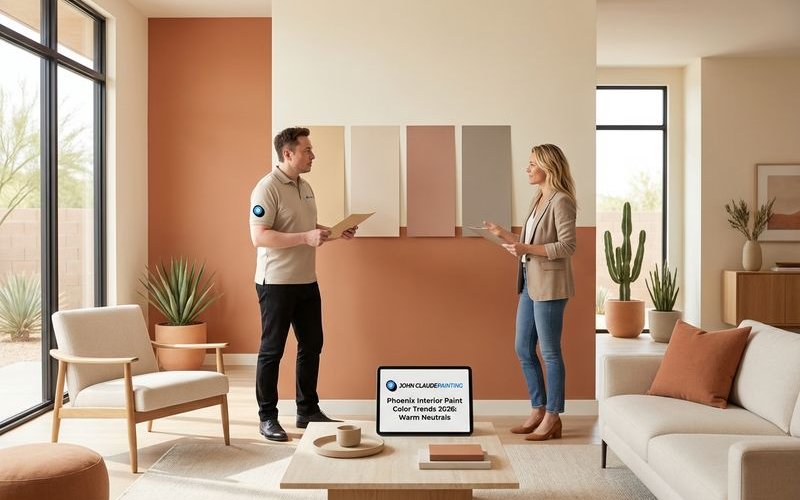
While gray is cooling down, we are seeing a massive surge in “sandy” neutrals. The 2026 HGTV Home by Sherwin-Williams Color of the Year, Universal Khaki (HGSW 6150), is leading this charge.
This isn’t the yellow-based khaki of the 90s; it’s a refined, grounded neutral that pairs perfectly with modern furniture.
The Travertine Fix: If you have travertine floors (like half of Chandler!), standard grays will clash with the pink/orange undertones of the stone.
- The Solution: Try Benjamin Moore’s Manchester Tan (HC-81). It has a subtle green undertone that neutralizes the pink in travertine, making your floors look intentional rather than dated.
Earthy Accents: “Sunbaked” Reds and clays
The trend of “Sunbaked Hues” is essentially a love letter to the Arizona landscape. We are moving away from bright primary accent walls toward deep, rich tones that feel like they were dug from the earth.
- The Star: Sherwin-Williams Henna Shade (SW 6326). It’s a moody, reddish-brown that brings incredible depth to a room without screaming “fire engine red.”
- The Pinterest Favorite: Keep an eye out for Persimmon. It’s trending nationally as a “warm hug” color and works beautifully as a front door color or a powder room statement.
Cool Blue-Greens: The “Heat Relief” Palette
Psychologically, cooling down your visual environment is a legitimate strategy for dealing with 110-degree summers. The 2026 trend here is “dusty” rather than “crisp.”
- Sherwin-Williams Quietude (SW 6212): A calming, grayed-down teal that looks incredible in bathrooms.
- Benjamin Moore Raindance (1572): Slightly deeper, perfect for bedrooms where you want a “sanctuary” feel.
Warm Whites: The Anti-Glare Choices
As mentioned, you want to avoid stark whites. We recommend “creamy” or “off-white” shades that soften the light.
- Sherwin-Williams Aesthetic White (SW 7035): This is a “chameleon” color. It sits right in that sweet spot where it works with both cool gray furniture and warm tile floors.
- Benjamin Moore Swiss Coffee (OC-45): A classic for a reason, but test it first—it can pull slightly yellow in late afternoon sun.
Deep, Moody Accents: “Restorative Darks”
If you want drama, look at the “Restorative Darks” palette. These are colors that absorb light, making them perfect for media rooms or home offices where you want to reduce glare.
- Benjamin Moore Silhouette (AF-655): A luxurious cross between charcoal and burnt umber. It’s far more interesting than a standard black.
- Sherwin-Williams Iron Ore (SW 7069): Still a favorite for 2026, especially for interior doors or kitchen islands.
Room-by-Room Sheen Guide
Choosing the right color is only half the battle. In dusty environments like ours, the sheen (shininess) dictates how easy the walls are to clean.
| Room | Recommended Sheen | Why It Works in Phoenix |
|---|---|---|
| Living / Bedrooms | Matte or Flat | Hides the drywall texture and imperfections common in Arizona tract homes. |
| Hallways / Kids’ Rooms | Satin | The “Sweet Spot.” It’s scrubbable enough to remove desert dust but not so shiny that it highlights texture. |
| Kitchen / Bath | Satin or Soft Gloss | Essential for moisture resistance. Avoid “High Gloss” on walls as it will reflect too much glare. |
| Doors / Trim | Semi-Gloss | Creates a nice contrast against matte walls and stands up to vacuum cleaners and fingerprints. |
Colors to Approach with Caution
”Lemon” Yellows
While yellow is technically “sunny,” in our environment, a bright yellow like Sherwin-Williams Lemon Twist can feel manic and overwhelming when hit with direct sunlight.
- The 2026 Alternative: If you want that zest, look at Wasabi tones (yellow-greens) which feel fresher and less aggressive.
Cool “Blue-Based” Grays
The era of “flippers gray” (that cold, steel gray) is over. In north-facing rooms in Gilbert or Mesa, these colors can turn lavender or look shadow-y and depressing.
- The Fix: Always opt for “Greige” (Gray + Beige) like Agreeable Gray or the Universal Khaki mentioned earlier.
High-Chroma Reds
Bright reds tend to fade faster than any other color due to UV exposure. If you have a window wall, that vibrant red might look pink within three years.
- The Pro Tip: Stick to the earthy, oxide-based reds like Henna Shade which are more UV stable.
Professional Tips for Phoenix Homes
The “24-Hour” Test Rule
Never buy 5 gallons based on a paper swatch. Paint a 2-foot square on two walls: one that faces the window and one that receives no direct light.
- Watch it Change: Look at it at 8:00 AM, Noon, and 8:00 PM. A color like Pale Oak can look off-white in the morning and taupe at night.
Combatting Desert Dust
We recommend investing in high-quality acrylic paints like Sherwin-Williams Emerald or Benjamin Moore Aura.
- Why It Matters: These paints cure to a harder finish that resists “burnishing” (shiny spots) when you wipe down the inevitable dust layers that settle on our walls.
Connecting Indoor and Outdoor
If you have a view of a golf course or a desert wash, don’t ignore it. Green-gray colors inside can frame a desert view beautifully, effectively pulling the outdoors in.
Ready to Transform Your Space?
There is a science to getting these colors right, and you don’t have to guess.
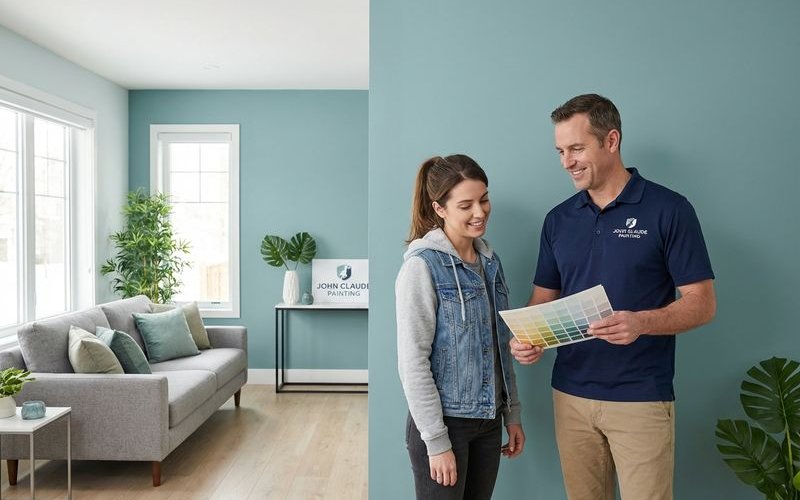
At John Claude Painting, we specialize in helping Phoenix homeowners navigate these unique lighting challenges. Our interior painting services include color consultation to help you find the perfect shade for your home. Whether you need to update those travertine floors or you’re ready to embrace the new “Sunbaked” trends of 2026, our team is here to ensure the finish is as perfect as the color.
Contact us today for your free estimate and let’s create a home that feels right for you—and for Arizona.
Topics:
Found this helpful?
Share this article with friends or neighbors who might benefit from these insights.