Best Time of Year for Exterior Painting in Phoenix
Timing is everything for exterior painting in Arizona. Learn the ideal seasons, temperature ranges, and weather conditions for a lasting paint job.
John Claude Painting
Family-owned Phoenix painting since 2005
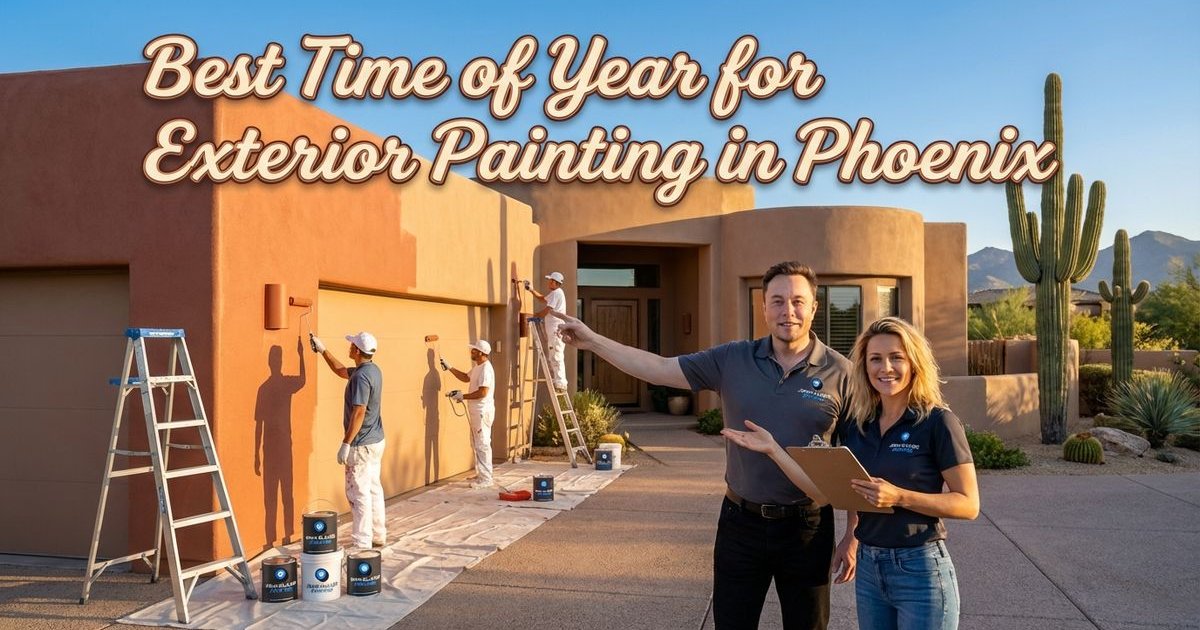
Best Time of Year for Exterior Painting in Phoenix
Timing an exterior paint job correctly can mean the difference between a finish that lasts 10 years and one that fails in three.
Phoenix’s extreme climate creates specific windows when conditions are ideal for painting. There are also times when you should definitely wait.
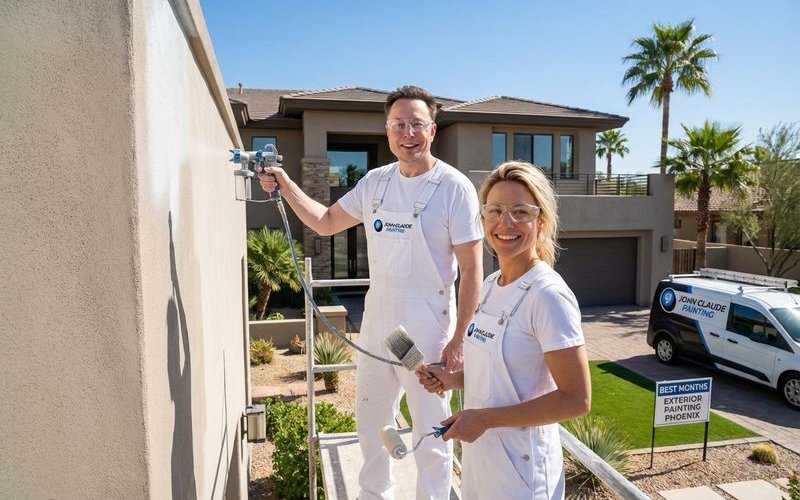
The Short Answer
If you want the longest-lasting results, these are your windows:
Best Times: March through May and October through November.
Acceptable: February, early June, September, and December.
Avoid: Late June through August (monsoon season plus extreme heat).
Understanding Paint’s Temperature Needs
Why Temperature Matters
Paint is a chemical product that cures, rather than just dries. Proper curing requires stable conditions for 24 to 48 hours after application.
Most high-quality latex paints used in Arizona, like Dunn-Edwards Evershield or Sherwin-Williams Duration, have specific thermal limits.
- Minimum temperature: 35°F to 50°F (depending on the specific product line).
- Maximum temperature: 90°F (surface temperature).
The Surface Temperature Trap
This is the most common mistake we see homeowners make. They check their weather app, see it’s 95°F, and think it’s safe to paint.
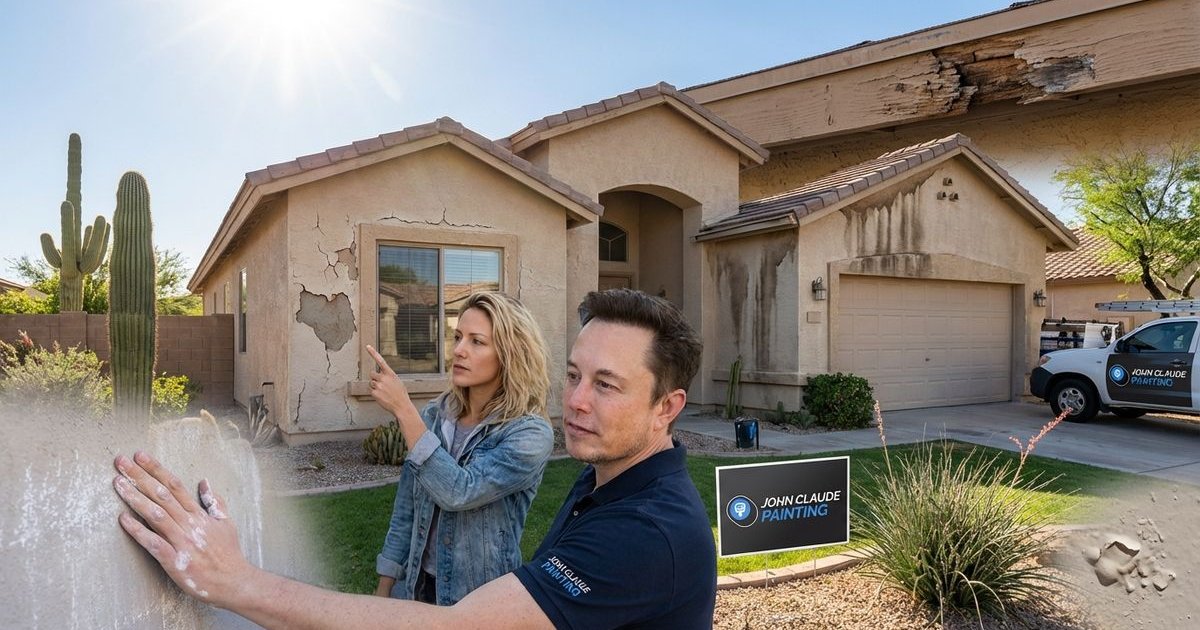
Here is the reality: Stucco and siding surfaces are often 20°F to 40°F hotter than the air temperature.
If it is 95°F outside, your south-facing wall could easily be 135°F. That is far too hot for proper adhesion.
When surfaces get that hot:
- Paint “flash dries” before it bonds to the stucco.
- Brush and roller marks become permanent textures.
- The chemical bond fails, leading to early peeling.
- Blisters form as trapped solvents try to escape.
Season-by-Season Breakdown
Spring (March - May): The “Goldilocks” Window
Pros:
- Moderate air temperatures (70°F-95°F).
- Low humidity allows for excellent curing.
- Long daylight hours give us plenty of working time.
Cons:
- Wind: Spring often brings gusty days that can blow dust into wet paint.
- Pollen: The yellow dust from blooming Palo Verde trees can stick to fresh surfaces.
Best Approach: We monitor wind forecasts daily. If gusts exceed 15 mph, we pause spraying to prevent “overspray drift” and texture damage.
Summer (June - August): High Risk
Pros:
- None for exterior painting.
Cons:
- Extreme Heat: Air temps over 110°F mean surface temps can hit 160°F.
- Monsoons: Sudden humidity spikes interfere with curing.
- Dust Storms: Haboobs can ruin a wet finish in minutes.
If You Must Paint in Summer:
- Only paint north-facing or fully shaded walls.
- Start at dawn (5:00 AM) and stop hard by 9:00 AM.
- Use specialized hot-weather additives (though we prefer to wait).
Our Policy: We generally do not schedule full exterior repaints during peak summer months. It simply isn’t worth the risk to your investment.
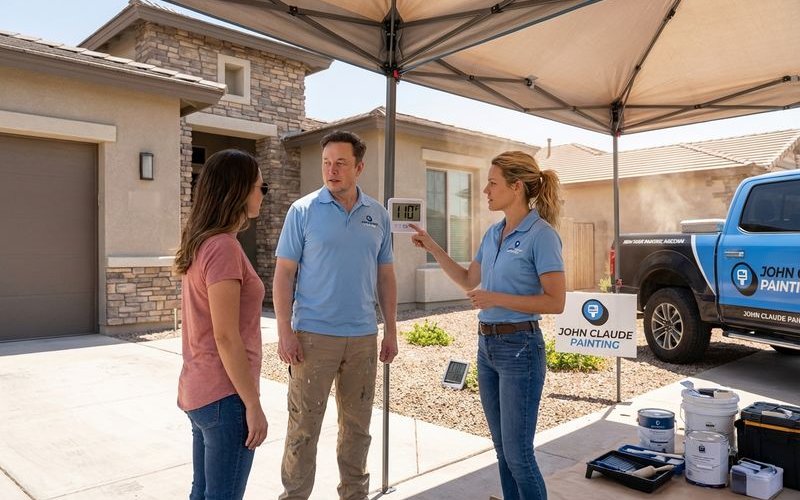
Fall (September - November): The Prime Season
Pros:
- Consistent cooling trend (85°F-95°F in Sept, 70°F-85°F in Oct-Nov).
- Monsoons have ended, removing the humidity risk.
- “Holiday Ready” deadlines motivate crews to finish efficiently.
Cons:
- The “HOA Bottleneck”: Everyone wants their home painted before Thanksgiving.
- Booking Delays: Top-rated painters are often booked 4-6 weeks out.
Best Approach: October and November are arguably the best months of the year for painting in the Valley.
Winter (December - February): Good with Caution
Pros:
- Mild daytime highs (60°F-75°F).
- Zero humidity concerns.
- Easier to book top-tier contractors.
Cons:
- The Dew Point Danger: Paint needs to be “touch dry” before evening dew settles.
- Freezing Nights: If temps drop below 35°F at night, curing stops.
Best Approach: We start later (around 9 AM) to let surfaces warm up and stop earlier (around 3 PM) to ensure the paint is dry before the sun sets.
Daily Timing Strategies
Summer and Early Fall
- Start: First light (5:30-6:00 AM).
- Stop: 10:00 AM on any sun-exposed surface.
- Afternoon: Prep work only (masking windows, trenching), or painting fully shaded north walls.
Winter
- Start: 9:00-10:00 AM (waiting for the overnight chill to leave the stucco).
- Stop: 3:00-4:00 PM.
- Reason: We need 2-3 hours of dry time before the temperature drops and dew forms.
Spring and Late Fall
- Start: 7:00 AM.
- Stop: 4:00 PM.
- Flexibility: This is the most efficient time for crews, as we can work a full 8-hour day without heat delays.
Weather Conditions to Monitor
Ideal Conditions
| Factor | Ideal Range | Why It Matters |
|---|---|---|
| Air Temp | 50°F - 85°F | Allows paint to flow and level properly. |
| Surface Temp | < 90°F | Prevents flash drying and peeling. |
| Humidity | 40% - 70% | Ensures proper chemical curing. |
| Wind | < 15 mph | Prevents dirt contamination and overspray. |
Conditions to Avoid
- Rain Forecast: Any chance of rain within 24 hours.
- High Wind: Gusts over 15 mph.
- Freeze Warning: Overnight lows predicted below 35°F.
Monsoon Season Considerations
The Phoenix monsoon season (officially June 15 - September 30) presents unique challenges beyond just rain.
Microbursts: Sudden, intense downdrafts can blast water sideways into curing paint.
Humidity Spikes: High humidity traps water inside the paint film. If the surface is then hit by direct sun, that trapped water turns to vapor and causes blistering.
Dust Storms: A haboob can coat a wet house in a layer of red dirt, requiring a complete sand-down and repaint.
We typically recommend completing exterior painting before June 1st or waiting until early October.
Planning Your Project
The “HOA Lag” Factor
If you live in Chandler, Gilbert, or Ahwatukee, do not ignore your HOA timeline.
Most Architectural Review Committees (ARCs) only meet once a month.
- If you submit your application one day late, you wait 30 days for the next meeting.
- By the time you get approval, your ideal weather window might be gone.
Pro Tip: Submit your color request 60 days before you want to start painting.
Booking Lead Time
- Spring/Fall (Peak): Book 6-8 weeks in advance.
- Winter (Off-Peak): Book 3-4 weeks in advance.
- Summer: Availability is high, but weather risk is higher.
Special Situations
Selling Your Home: Plan to paint 4-6 months before listing. This ensures the paint has fully cured and any “touch-ups” are blended perfectly before professional photography.
Before Monsoon Season: If you want to beat the storms, start your project by early May. This gives the paint at least 2-3 weeks to cure and harden before the first dust storms roll in.
Our Approach
At John Claude Painting, we schedule exterior projects strategically to protect your home.
We are honest about timing constraints. If it is too hot to paint the west wall, we won’t do it just to finish the job faster.
We monitor weather forecasts daily. Our team adjusts start times and work zones based on real-time heat and wind data.
Quality results require proper conditions. We would rather delay a start date than compromise the longevity of your new paint job.
Ready to Schedule?
Contact us to discuss timing for your exterior painting project. We’ll help you choose the best window for lasting results.
Topics:
Found this helpful?
Share this article with friends or neighbors who might benefit from these insights.