Deck Staining Tips: Protecting Your Wood from Arizona Sun
Learn the best practices for staining and sealing outdoor wood surfaces in Arizona's harsh climate. Extend the life of your deck, fence, or pergola.
John Claude Painting
Family-owned Phoenix painting since 2005
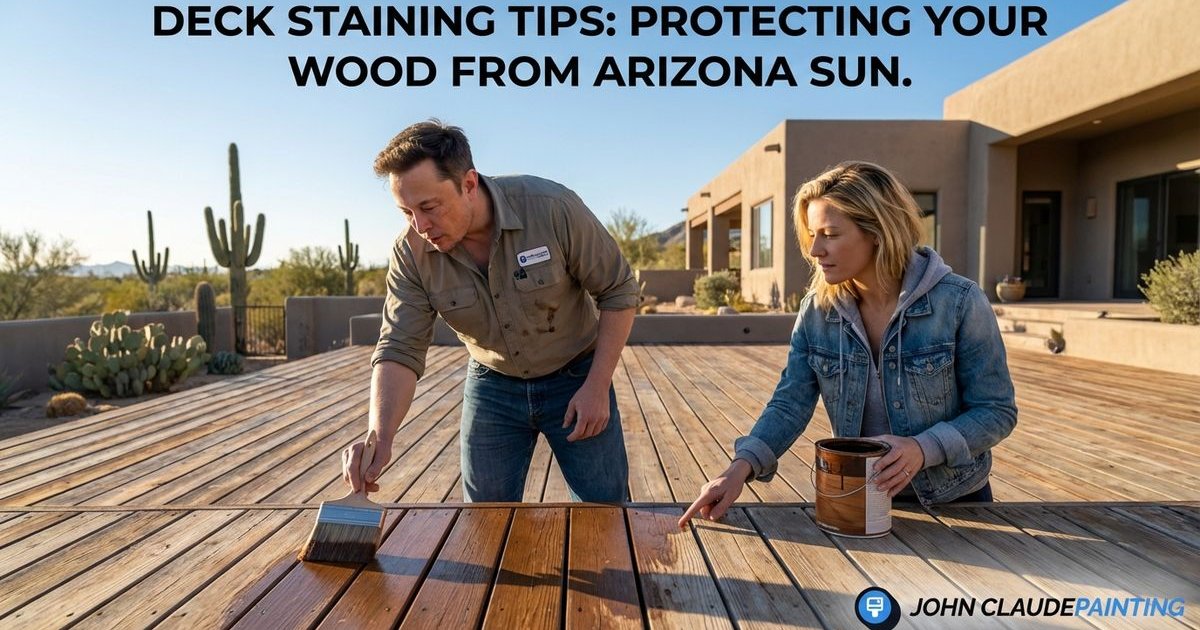
Arizona’s intense sun acts like a slow-burning fire on outdoor wood. Your deck, fence, or pergola faces thermal stress here that simply does not exist in other parts of the country.
We see the results of this exposure every day in Ahwatukee and Gilbert.
Standard maintenance advice from national magazines often leads to premature failure in the Sonoran Desert.
Our team has learned that the approach to staining here requires a completely different strategy to handle the extreme UV index and single-digit humidity.
Here is how to protect your outdoor wood surfaces effectively.
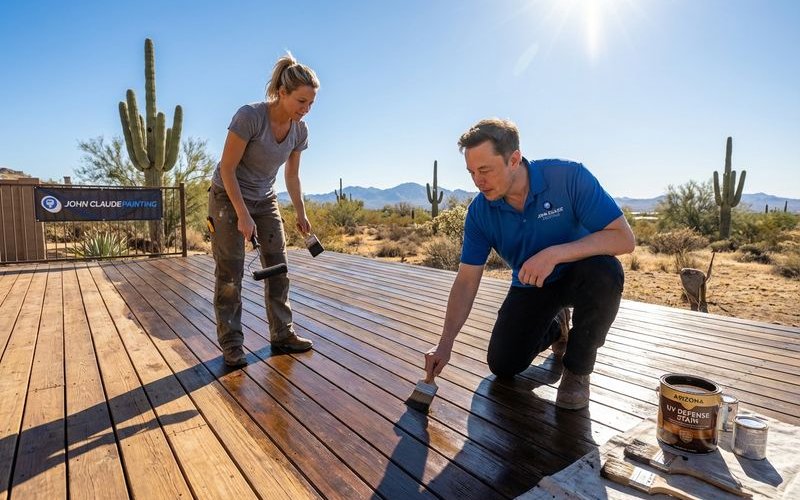
Understanding Arizona’s Impact on Wood
Why Arizona Is Different
UV Radiation Intensity Phoenix consistently ranks among the cities with the highest UV indices in North America, often hitting levels of 10 or 11+ during summer months. This intense radiation does more than just heat the surface.
It creates a photochemical reaction that degrades the lignin holding wood fibers together.
We call this “wood graying,” but it is actually the dead wood fibers detaching from the surface.
Surface Temperature Extremes While the air temperature might be 110°F, surface temperatures on a wood deck can easily exceed 160°F in direct sunlight. This heat cooks the solvents out of stains too quickly.
Rapid evaporation prevents the product from penetrating deep into the wood pores where it is needed most.
The “Thermal Shock” Factor Our dry climate creates massive temperature swings between day and night. Wood expands rapidly in the heat and contracts in the evening coolness.
This constant movement stresses the bond between the wood and the stain. film-forming finishes (like paints or varnishes) will crack and peel under this stress because they cannot move with the wood.
What This Means for Maintenance
Arizona wood surfaces operate on an accelerated aging timeline.
- Restaining Frequency: Expect to restain horizontal surfaces every 12 to 24 months, rather than the 3-5 years promised on the can.
- Product Selection: You must use penetrating oils rather than film-forming sealers.
- Preparation: Simple cleaning is rarely enough; the “dead” gray fibers must be removed first.
Choosing the Right Stain
Oil-Based vs. Water-Based
Oil-Based Stains (The Desert Standard): These products are designed to soak into the wood fibers rather than sitting on top.
- Penetration: They dive deep to replace the natural oils the sun dries out.
- Maintainability: When the stain fades, you can often just clean and re-coat without stripping.
- Flexibility: The oil moves with the wood during thermal expansion.
Water-Based Stains (Acrylics): These form a film on top of the wood, similar to a thin layer of plastic.
- The Risk: In our dry heat, these films tend to become brittle and peel.
- The Fix: Once an acrylic stain peels, you must sand or strip the entire deck down to bare wood before recoating.
- Color Retention: They hold color longer but sacrifice wood health.
Our Recommendation: For Arizona decks exposed to intense sun, penetrating oil-based stains are superior. They fade gracefully rather than peeling, making future maintenance significantly cheaper and easier.
Stain Opacity Options
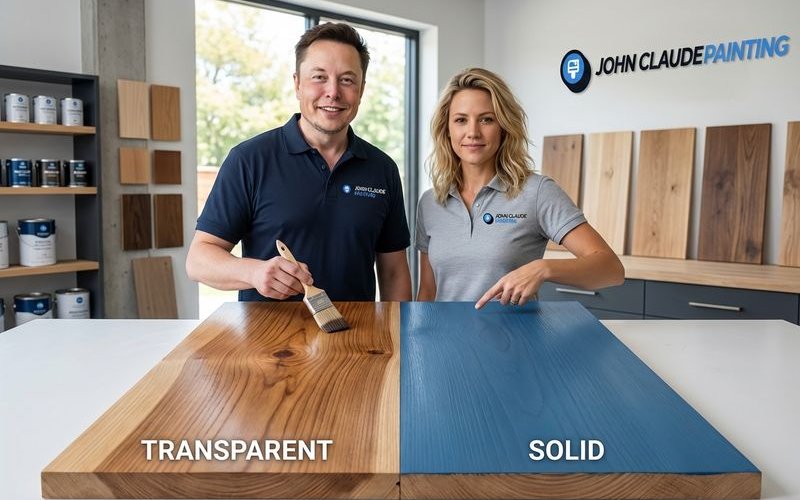
We created this comparison to help you balance aesthetics with longevity.
| Opacity Level | Appearance | UV Protection | Estimated AZ Lifespan | Best Application |
|---|---|---|---|---|
| Transparent (Clear) | Shows 100% grain | Minimal (No Pigment) | 6-8 Months | Only for shaded patios |
| Semi-Transparent | Tinted, visible grain | Moderate | 12-18 Months | New or good condition wood |
| Semi-Solid | Rich color, low grain | High | 2-3 Years | Older or weathered decks |
| Solid Stain | Paint-like look | Maximum | 3-5 Years | Damaged or mismatched wood |
Our Recommendation: Semi-transparent or semi-solid stains offer the best balance. The pigments (color) act as “sunglasses” for the wood, physically blocking UV rays while still allowing the grain to show.
Critical Product Features for Arizona
Must-Have Ingredients
Trans-Oxide Pigments Look for stains that use “trans-oxide” pigments rather than organic ones. These are ground from iron oxide and are far more resistant to fading under UV exposure.
Non-Drying Conditioning Oils Formulas containing paraffin oil or rosewood oil do not dry to a hard shell. They remain somewhat fluid inside the wood, which keeps it conditioned against dry rot and cracking.
Mildewcide Additives Even in the desert, monsoon season brings humidity. Shaded areas under pergolas or heavy planters can trap moisture long enough for black mold to form without these additives.
Quality Products We Recommend
We have tested dozens of brands in the Phoenix heat, and these consistently perform best:
- TWP 1500 Series: This is a professional favorite because it is a “wet-on-wet” application that penetrates deeply and resists graying.
- Messmer’s UV Plus: Formulated specifically for hardwoods like Ipe and softwoods common in the West, it has excellent color retention.
- Penofin Red Label: Contains Brazilian Rosewood Oil, which offers exceptional water protection, though it may darken the wood slightly.
Proper Application Process
Step 1: Chemical Cleaning
Power washing with water alone is a common mistake. It pushes dirt deeper into the pores and can damage soft pine.
- Use a sodium percarbonate cleaner (oxygen bleach) to lift dirt and gray wood fibers.
- Scrub with a stiff synthetic brush.
- Rinse thoroughly but use low pressure (under 1000 PSI) to avoid scarring the wood.
Step 2: Neutralization (The Forgotten Step)
Most deck cleaners have a high pH, which causes the wood to darken and disrupts the stain’s ability to bond.
- Apply a wood brightener (citric or oxalic acid) after cleaning.
- This restores the wood’s pH balance and opens the pores.
- The wood will visually brighten, signaling it is ready for stain.
Step 3: Strategic Timing
The “10 AM Rule”: In Phoenix, you should aim to finish staining by 10:00 AM during warmer months.
- Surface Temperature: If the wood is hot to the touch, the solvent will flash-dry.
- Wind: Apply when wind is below 10 mph to avoid debris sticking to the wet finish.
- Rain: Ensure no monsoon storms are forecast for 24 hours after application.
Step 4: Application Technique
The Flood Coat Method:
- Apply a generous amount of stain using a sprayer or roller.
- Let the wood drink the oil for 15-20 minutes.
- Critical Step: Wipe off all excess oil that has not soaked in.
Our Warning: If you leave puddles of oil on the surface, they will dry into a sticky, shiny mess that attracts dust and will eventually peel. The stain must be in the wood, not on it.
Maintenance Between Staining
The “Leaf Blower” Approach
Sweeping with a stiff broom can grind abrasive desert dust into the finish, dulling it over time.
- Use a leaf blower to clear dust and debris weekly.
- This is gentler on the finish and removes grit from between the boards where rot starts.
The Water Test
You do not need to guess when it is time to re-coat.
- Splash a cup of water on the deck boards.
- If the water beads up, your protection is still active.
- If the water soaks in and darkens the wood immediately, the oil has evaporated, and it is time for a maintenance coat.
Furniture Pads
Arizona dust acts like sandpaper under chair legs.
- Install high-quality glides on all patio furniture.
- This prevents deep scratches that break the seal of the stain, allowing moisture to enter.
Common Mistakes to Avoid
Staining New Wood Too Soon
New lumber sold at big-box stores typically has a high moisture content or a “mill glaze” that prevents stain absorption.
- The Fix: Wait 3-6 months for new pressure-treated pine to dry out and acclimate to our humidity levels before staining.
- The Test: If water beads on bare, new wood, it is not ready to accept stain.
Over-Application
Many homeowners think “more is better.”
- The Reality: Wood can only hold so much oil.
- The Result: Excess stain forms a skin that stays tacky, tracks onto your shoes, and eventually flakes off.
Skipping the Brightener
Applying stain directly to gray, weathered wood results in a black, muddy appearance.
- The Rule: You must restore the wood to its original color before applying new pigment.
When to Restain in Arizona
Visual Indicators
- Fading: The color looks washed out, especially in high-traffic areas.
- Graying: You see gray wood fibers emerging through the finish.
- Checking: Small hairline cracks begin to appear near screw holes.
Recommended Schedule
| Exposure Direction | Inspection Frequency | Likely Restain Interval |
|---|---|---|
| South / West Facing | Every 6 Months | 12 - 18 Months |
| East Facing | Every 12 Months | 18 - 24 Months |
| North / Shaded | Every 12 Months | 24 - 36 Months |
DIY vs. Professional Staining
DIY Makes Sense If:
- Condition: The deck is new or the existing stain is an oil-based penetrating sealer that does not need stripping.
- Size: The area is under 500 square feet.
- Equipment: You have access to a quality pressure washer and the patience to wipe up excess oil.
Professional Makes Sense If:
- Restoration Required: The deck has peeling acrylic paint or solid stain that requires chemical stripping and sanding.
- Complexity: You have pergolas or second-story decks that require ladders and safety gear.
- Volume: Large projects in the Arizona heat can be physically dangerous for those not acclimated to outdoor labor.
Our Wood Staining Services
At John Claude Painting, we approach wood care as a science tailored to the desert environment.
Our process goes beyond simple application to ensure longevity:
- Multi-step chemical cleaning and pH balancing.
- Sanding to remove dangerous splinters and open wood pores.
- Use of premium, contractor-grade oils not typically found in retail stores.
- Scheduling based on precise weather windows to ensure proper curing.
We help homeowners in Chandler, Gilbert, and Phoenix protect their investment against the sun.
Ready to protect your outdoor wood? Learn more about our wood staining services and contact us for a free estimate.
Topics:
Found this helpful?
Share this article with friends or neighbors who might benefit from these insights.