How to Minimize Disruption During Commercial Painting Projects
Practical tips for business owners to keep operations running smoothly while your commercial space gets painted. Scheduling strategies included.
John Claude Painting
Family-owned Phoenix painting since 2005
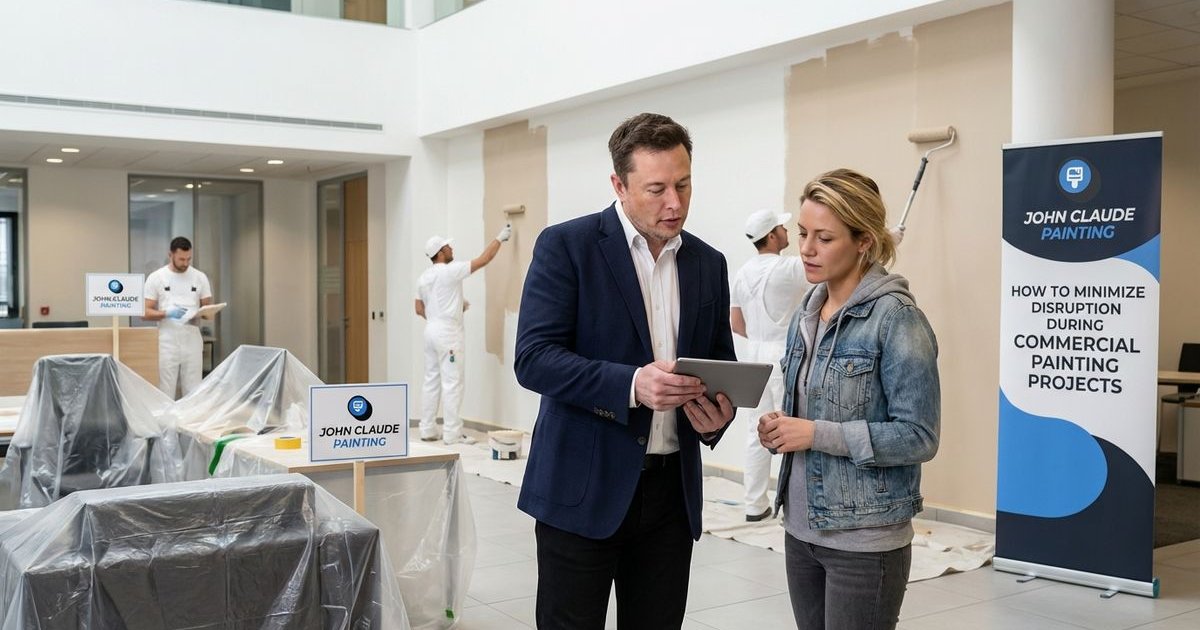
One of the biggest concerns business owners have about commercial painting is disruption to operations. You know the feeling: every hour your doors are closed or your team is distracted, revenue is potentially slipping away.
The good news is that with proper planning and an experienced commercial painter, you can transform your space with minimal impact on your business. We have seen firsthand how a strategic approach keeps the registers ringing while the walls get refreshed.
Here is how to manage the process effectively.
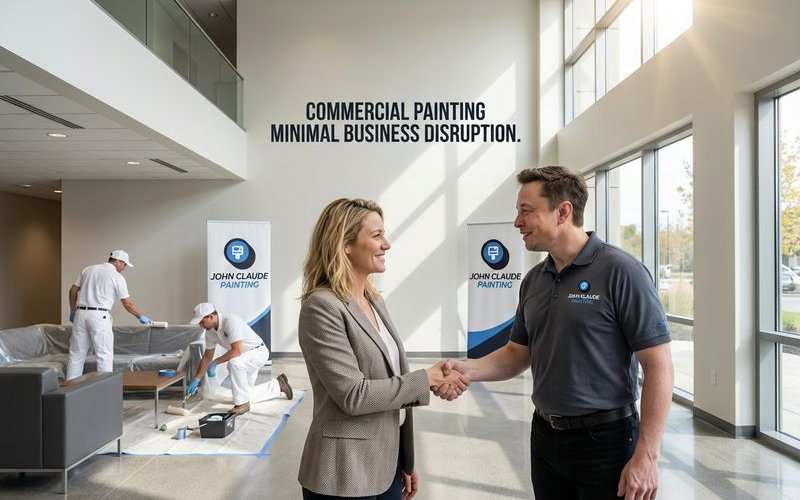
Strategic Scheduling Options
We understand that a 9-to-5 painting schedule rarely works for a busy commercial enterprise. Flexibility is the cornerstone of a successful project.
After-Hours Painting
This method is the standard for businesses that cannot sacrifice daytime productivity.
- The Workflow: Work begins immediately after your business closes and stops well before your first employee arrives.
- The Advantage: Your team walks into a clean, functional workspace every morning.
- The Data: Most commercial crews can achieve a “zero-impact” turnover by utilizing fast-curing products that dry to the touch in one hour or less.
Best for:
- Retail stores requiring customer access.
- Offices with standard 8-to-5 hours.
- Medical/dental practices.
- Banks and professional services.
Considerations:
- Labor Costs: Expect a shift differential. Night work typically carries a labor premium of 10% to 20% compared to standard day rates.
- HVAC Requirements: You may need to keep air conditioning running overnight to ensure proper curing, especially during Phoenix summers.
- Security: Coordination with alarm companies or security personnel is essential.
Weekend Projects
Concentrating work during closed days often accelerates the timeline.
- The Workflow: Crews tackle large continuous areas from Friday evening through Sunday afternoon.
- The Advantage: Painters have full reign of the space without navigating around desks or customers.
- The Throughput: A full crew can often complete 2,000+ square feet of wall space in a single weekend blitz.
Best for:
- Offices closed on weekends.
- Schools and institutions.
- Professional services.
Considerations:
- Premium Rates: Weekend labor often incurs a higher premium, sometimes up to 1.5x the standard rate depending on the contractor.
- Timeline Compression: While faster, this leaves zero margin for error if materials run short.
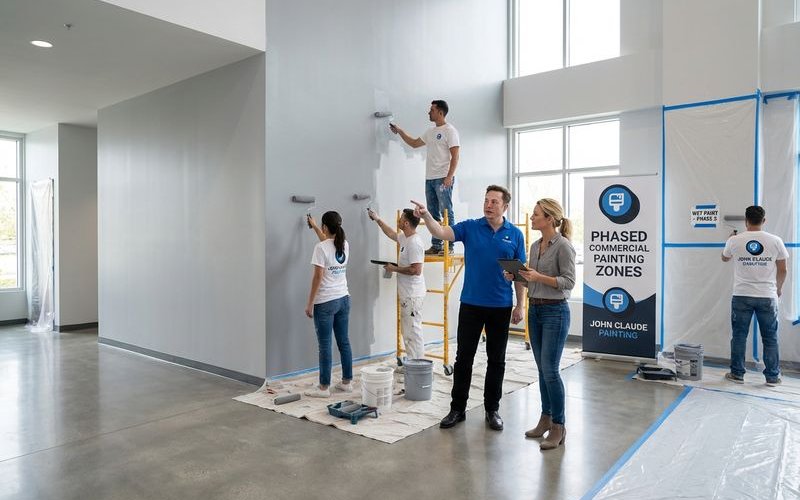
Phased/Zone Approach
Painting sections while other areas remain operational allows for continuous business function.
- The Strategy: We divide the floor plan into distinct “zones” (e.g., North Wing, Lobby, Conference Rooms).
- The Containment: Physical barriers like plastic sheeting or ZipWall systems isolate the work area from your staff.
- The Access: Customers and staff always have a safe, clean path to active areas.
Best for:
- Large facilities over 10,000 square feet.
- Warehouses and industrial spaces.
- Restaurants (separating the dining room from the bar).
- Hotels (renovating floor by floor).
| Scheduling Method | Cost Impact | Disruption Level | Project Speed |
|---|---|---|---|
| After-Hours | Moderate (Shift Premium) | Low | Fast |
| Weekend Blitz | High (Overtime Rates) | Very Low | Fastest |
| Phased Zones | Low (Standard Rates) | Moderate | Slower |
Temporary Closure
Sometimes a brief, total shutdown is the most mathematically sound decision.
- The Calculation: If a phased project takes two weeks but a closure finishes it in three days, the savings on labor might outweigh the three days of lost revenue.
- The Efficiency: Crews can spray paint rather than roll, which is significantly faster and produces a smoother factory-like finish.
Best for:
- Small spaces under 1,500 square feet.
- Major renovations involving flooring and painting simultaneously.
- Retailers with seasonal downtime (e.g., post-holiday).
Preparation Strategies
Before the Project
Clear Communication You need to manage expectations before the first drop cloth is laid down.
- The Action: Send an internal memo 72 hours in advance detailing exactly which rooms are off-limits.
- The Signage: Post clear maps in break rooms showing the “Active Work Zones.”
- The Coordination: Verify that building management has cleared the service elevator for contractor use.
Space Preparation We rely on a clean deck to work efficiently and safely.
- The Standard: Use Ram Board or Masonite for floor protection rather than thin paper. It withstands heavy foot traffic and dropped tools.
- The Inventory: Move sensitive stock to a locked, central location.
- The Clearance: Create a 3-foot perimeter around all walls to allow for ladder placement.
IT and Equipment Protecting your digital infrastructure is non-negotiable.
- The Protection: Tightly cover servers and copiers with 1-mil plastic sheeting to prevent micro-dust intrusion.
- The Heat: Ensure cooling airflow remains unblocked for server racks even when covered.
- The Backup: Run a full data backup the night before work begins in server rooms.
During the Project
Daily Communication Consistent updates prevent small issues from becoming expensive problems.
- The Huddle: Schedule a 5-minute “stand-up” meeting with the foreman every morning at 8:00 AM.
- The Log: Request a daily email summary listing completed areas and the plan for tomorrow.
- The Contact: Exchange cell numbers for after-hours emergencies like a triggered alarm.
Access Management Safety protocols protect your liability as much as your people.
- The Path: Establish a “Clean Corridor” for employees that never crosses a wet paint zone.
- The Exits: Never block fire exits, even for a few minutes.
- The Signage: Use “WET PAINT” signs that include the date and time posted.
Quality Monitoring You should not wait until the end to check the work.
- The Walk: Inspect the previous night’s work every morning.
- The Tape: Use blue painter’s tape to mark any touch-ups needed directly on the wall.
- The Documentation: Take photos of progress daily to track against the schedule.
Industry-Specific Tips
Retail Stores
Timing:
- Schedule during “Inventory Light” periods to reduce moving costs.
- Target the lull weeks in January or late summer.
Priorities:
- Product: Ask for Benjamin Moore Ultra Spec SCUFF-X or a similar high-performance coating. It resists hanger marks and cart bumps significantly better than standard latex.
- Sequence: Finish the sales floor first so revenue generation returns to 100% immediately.
Restaurants
Timing:
- Target Mondays or Tuesdays, which are statistically the lowest revenue days.
- Utilize the gap between lunch service (2 PM) and dinner prep (4 PM) for prep work.
Special Considerations:
- Compliance: Paints used in food prep areas must often meet USDA/FDA requirements for incidental food contact surfaces.
- Durability: Kitchen walls require epoxy-modified paints that can withstand aggressive degreasers.
- Speed: Use quick-dry primers that allow for top-coating within one hour.
Medical/Dental Offices
Timing:
- Align with major staff training days or conferences.
- Utilize long holiday weekends like Thanksgiving or Memorial Day.
Special Considerations:
- Standards: Look for products meeting Green Seal GS-11 standards or MPI Green Performance certifications.
- Sanitization: The finish must be able to withstand quaternary ammonium cleaners (Quats) without fading.
- Sterile Zones: Seal off HVAC returns in the work area to prevent dust migration to sterile operating rooms.
Office Buildings
Timing:
- Department-by-department rotation prevents total gridlock.
- Friday evenings are ideal for lobbies and high-traffic corridors.
Special Considerations:
- Dryfall Paint: For open industrial ceilings, use “Dryfall” coatings where overspray dries to dust before hitting the floor, making cleanup instant.
- Whiteboards: Cover all dry-erase boards with hard cardboard, as plastic static can ruin the surface.
Low-VOC and Odor Management
Modern commercial paints have evolved significantly in the last five years.
Product Selection
We prioritize health and air quality by choosing advanced formulations.
- The Standard: Specify “Zero VOC” paints, which contain less than 5 grams of Volatile Organic Compounds per liter.
- The Brands: Lines like Sherwin-Williams Harmony or Benjamin Moore Eco Spec are designed specifically for occupied spaces.
- The Tech: Some modern paints actually contain odor-eliminating technology that neutralizes existing smells in the building.
Ventilation Strategies
Airflow is the secret to fast curing and low odor.
- The Equipment: Use HEPA-filtered air scrubbers (negative air machines) to capture particulates and fumes.
- The HVAC: Switch system fans to “On” rather than “Auto” to keep air cycling continuously.
- The Fresh Air: If weather permits in the cooler months, open windows to create a cross-draft.
Timing Considerations
- The Window: Most low-VOC paints are odor-neutral within 4 hours of drying.
- The Sensitivity: Notify staff with asthma or chemical sensitivities 48 hours in advance so they can arrange remote work if needed.
Safety During Occupied Painting
Clear Communication
Safety in a commercial zone is defined by OSHA Standard 1910.144, which outlines safety color codes.
- The Briefing: Our crews hold a daily safety tailboard meeting before tools are unpacked.
- The Warning: Use “Safety Yellow” caution tape to clearly demarcate the swing radius of doors near work zones.
Pathway Management
- The Grip: Drop cloths on tile floors can be slippery. We use cloths with rubberized backings or tape them down securely.
- The Width: Maintain a minimum 36-inch clearance for ADA compliance in all hallways.
Equipment Safety
- The Lock: Ladders are chained or removed from the site nightly to prevent unauthorized use.
- The Chemicals: Solvents and thinners are never left on-site overnight in occupied buildings.
Working with Your Painter
Initial Consultation
Discuss with your painter:
- The Hard Deadlines: Are there upcoming board meetings or client visits that cannot be moved?
- The Traffic Flow: Where do your employees naturally congregate?
- The Access: Who holds the keys and alarm codes?
Detailed Planning
Request from your painter:
- The Gantt Chart: For projects longer than a week, ask for a visual timeline showing exactly where the crew will be on any given day.
- The SDS Book: A binder containing Safety Data Sheets for all products should be available on-site.
Ongoing Communication
Establish:
- The Single Point of Contact (SPOC): Designate one person from your team to funnel all instructions to the painter to avoid conflicting orders.
- The Escalation Ladder: Know exactly who to call if a crew member parks in the wrong spot or triggers a sensor.
Cost Considerations
Premium Scheduling Costs
Off-hours and weekend work typically adds:
- 10-20% for evening/night shifts due to wage differentials.
- 25-50% for Sunday or holiday work.
- Supervision: A dedicated night foreman may add a fixed weekly cost.
Cost-Saving Strategies
- The Bundle: Combining interior wall painting with exterior trim work can lower the overall “per square foot” price.
- The Season: Schedule interior work during the Phoenix summer (July-August). Contractors are often slower because exterior work is limited by the heat.
- The Access: Clearing the rooms yourself before the painters arrive saves billable man-hours.
Questions to Ask Your Commercial Painter
- What specific “Zero-VOC” product line do you recommend for my facility?
- Do you own your own air scrubbers or do you rent them?
- What is your Experience Modification Rate (EMR) for safety? (A score below 1.0 indicates a safe track record).
- Can you provide a certificate of insurance listing our company as “additionally insured”?
- How do you handle security protocols for after-hours access?
- Will there be an English-speaking foreman on-site at all times?
Our Approach at John Claude Painting
We have painted occupied commercial spaces throughout Phoenix for over 20 years. Our teams understand the unique challenges of the Valley, from how monsoon humidity affects drying times to the necessity of early starts in the summer.
Our approach includes:
- Detailed pre-project planning using Critical Path Method scheduling.
- Flexible scheduling options including split shifts and night crews.
- Experienced commercial crews who have passed background checks for secure facility access.
- Daily cleanup and protection using heavy-duty protection board.
- Clear communication throughout with a dedicated project manager.
- Minimal disruption commitment backed by our “Zero-Punch” closeout goal.
Let’s discuss how we can transform your commercial space while keeping your business running smoothly. Learn more about our commercial painting services and contact us for a free consultation.
Topics:
Found this helpful?
Share this article with friends or neighbors who might benefit from these insights.