When to Restain Your Fence: Arizona Homeowner Guide
Know the signs that your wooden fence needs restaining and learn the best timing and products for Arizona's desert climate.
John Claude Painting
Family-owned Phoenix painting since 2005
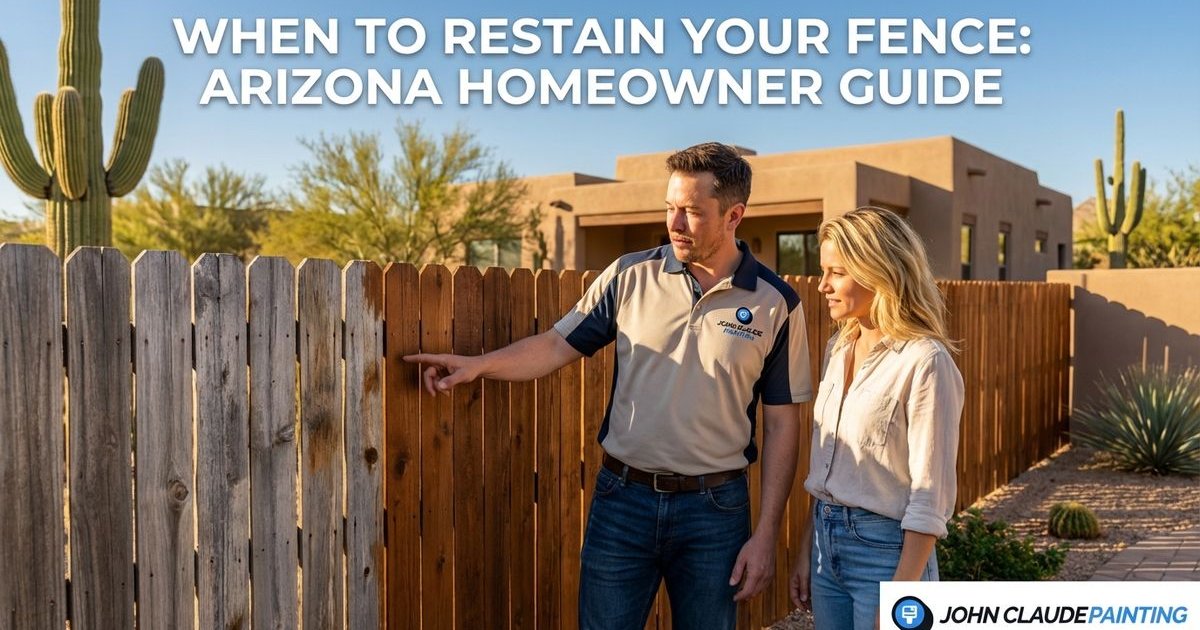
Your wooden fence works hard in Arizona’s punishing climate. Knowing when to restain, and doing it before damage becomes serious, saves money and extends your fence’s life. Here is how to know when it is time.
The Simple Water Test
You don’t need expensive equipment to check your wood’s condition. The quickest way to know if your fence needs restaining relies on basic physics.
- Splash water on the wood.
- Watch what happens for 60 seconds.
If water beads up: Your protective finish is still working. Rainwater is staying on the surface rather than rotting the fibers. Monitor the situation, but no immediate action is needed.
If water soaks in: Your finish has failed. The wood darkens immediately as it absorbs the liquid. Plan to restain soon to prevent warping and rot.
We use this test constantly during consultations in Chandler and Gilbert. This test works because stain and sealant create water-repellent barriers. When they degrade, water penetrates the wood, and damage follows.
Visual Signs Your Fence Needs Attention
Color Fading
Comparing your fence’s current state to its original glory is the most obvious indicator. Look at these specific areas:
- A protected section under a patio covering (the “control” group).
- Old photos from when the installation was new.
- The original stain color sample or can.
Significant fading indicates UV damage. In Phoenix, UV radiation breaks down the chemical bonds in the stain pigments rapidly. Reduced color means reduced protection.
Gray Weathering
Untreated or poorly protected wood turns gray quickly in the desert. This color shift happens because:
- Surface fibers break down under solar radiation.
- Lignin (wood’s natural binder) degrades and washes away.
- UV and moisture damage accumulates.
Gray wood isn’t just cosmetic. It indicates that the structural integrity of the outer layer is failing.
Rough or Splintery Surface
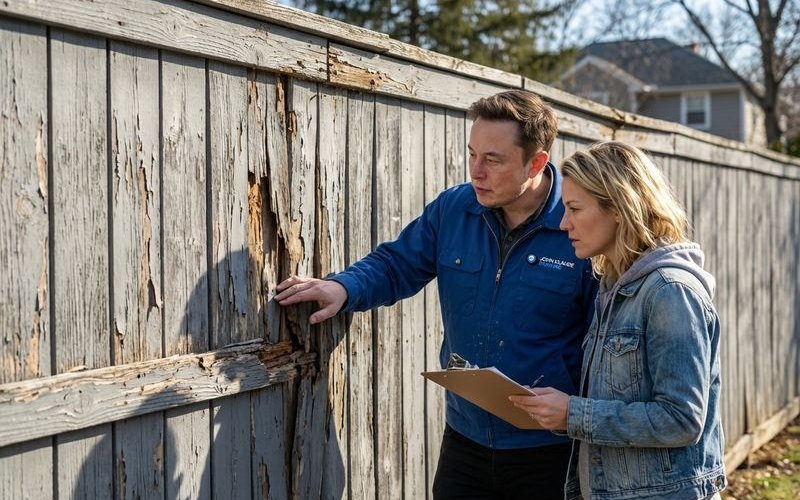
Run your hand along the fence carefully. If it feels rough, has raised grain, or is splintery, the protection is gone.
The wood fibers are breaking down and lifting away from the board. Restaining after a light sanding (typically 60 to 80 grit) can stop this progression.
Checking and Cracking
Small surface cracks, known in the industry as “checking,” indicate the wood is drying out.
- Checking: Thin cracks that run with the grain.
- Failed moisture barrier: Oil has evaporated from the wood cells.
- Age-related deterioration: Natural expansion and contraction.
Deep cracks are more serious. These may require wood filler or board replacement before we apply any new product.
Dark Spots or Mold
Shaded areas or fences recovering from monsoon season often show specific discoloration.
- Dark spots: These usually indicate mold or mildew growth.
- Action required: Cleaning with a sodium percarbonate cleaner and restaining.
- Treatment: You may need a mildewcide additive in your stain.
Arizona-Specific Timeline
Due to our intense sun, Arizona fences need more frequent care than national averages. The UV index here frequently hits 11+, which cooks standard finishes.
General Guidelines
We generally see finishes fail on this schedule in the Metro-Phoenix area:
| Fence Exposure | Restain Interval |
|---|---|
| Full south/west sun | Every 18-24 months |
| Mixed sun/shade | Every 2-3 years |
| Mostly shaded | Every 3-4 years |
Factors That Shorten Intervals
- South or West facing: These walls receive the harshest afternoon sun.
- No overhead coverage: Direct exposure accelerates oxidation.
- Light or transparent stain: Clear sealers lack the pigment necessary to block UV rays.
- Budget-quality products: Cheap acrylics often peel within a year in this heat.
Factors That Extend Intervals
- North facing: These areas stay cooler and retain color longer.
- Partial shade: Mesquite or Palo Verde trees provide crucial UV relief.
- Solid or semi-solid stain: Higher pigment load acts as a physical sunblock.
- Premium UV-blocking products: Brands like Sherwin-Williams SuperDeck or Dunn-Edwards usually perform better.
Best Times to Restain in Phoenix
Ideal Seasons
Timing is everything when working with exterior wood stains.
Spring: March-May
- Temperatures are moderate (70°F - 85°F).
- We can work before extreme heat sets in.
- Humidity is low, allowing for deep oil penetration.
- Drying conditions are optimal.
Fall: October-November
- Monsoons have ended, ensuring dry wood.
- Temperatures are cooling down.
- Good drying conditions exist before winter.
- You avoid the risk of trapping moisture in the wood.
Times to Avoid
Summer: June-August
- Surface temperatures often exceed 140°F.
- Stain flash-dries, preventing absorption.
- Poor penetration leads to peeling.
- Monsoon moisture risks trapping water under the finish.
Winter Cold Snaps
- Nights below 50°F prevent proper curing.
- Oil-based stains may remain tacky for days.
- Usually fine during the day, but always watch the overnight low forecast.
Ideal Conditions
Check these metrics before popping the paint can lid:
- Air temperature: 50°F to 90°F.
- Surface temperature: Under 95°F (Perform the “touch test”—if it’s too hot to hold your hand on, it’s too hot to stain).
- Humidity: Low to moderate.
- Rain forecast: Clear for 24-48 hours.
- Wind: Light or calm to prevent debris from sticking to wet stain.
Preparation Before Staining
Cleaning
Proper adhesion is impossible on a dirty fence.
- Power wash: Remove dirt and gray wood fibers (keep pressure under 1500 PSI to avoid damage).
- Chemical cleaning: Use a dedicated deck/fence cleaner to lift grime from the pores.
- Drying: Allow complete drying (24-48 hours) before applying product.
Repairs
Address structural issues before applying cosmetic fixes.
- Replace rotted or warped boards.
- Secure loose pickets with exterior-grade screws.
- Set popped nails flush with the wood.
- Fill significant cracks with wood putty if using solid stain.
Sanding
If the fence was previously stained, mechanical preparation is often necessary.
- Light sanding: Opens wood pores closed by weathering.
- Smoothing: Removes raised grain fibers.
- Penetration: Helps new stain soak in rather than sitting on top.
Choosing the Right Stain
For Arizona Conditions
The desert environment demands specific chemical properties. Look for:
- High UV blockers/inhibitors: Essential for color retention.
- Non-film forming: Penetrating oils are often better because they don’t peel.
- Mildew resistance: Necessary for irrigated backyards.
- Quality brand: We prefer professional-grade lines over big-box economy options.
Stain Types
Semi-Transparent: Shows the wood grain clearly. Offers moderate protection and typically lasts 2-3 years here.
Semi-Solid: Some grain remains visible, but the color is richer. Provides better UV protection and a 3-4 year life.
Solid: Looks like flat paint and hides the grain. Offers maximum protection and is the longest-lasting option (5+ years).
Our Recommendations
For Arizona fences exposed to sun, semi-solid stains offer the best balance of appearance and protection.
We find they provide meaningful UV blocking while still showing the wood’s character. Unlike solid stains, they are also easier to recoat down the road since they don’t peel as heavily.
DIY vs. Professional
DIY Considerations
Fence staining seems simple, but the logistics can be deceptive.
- Scope: A standard backyard has 150-200 linear feet of fencing.
- Surface Area: You must stain both sides and the edges.
- Prep Work: Cleaning and masking usually take longer than the staining itself.
- Time: Expect to spend two full weekends on a standard project.
- Cost: Quality brushes, sprayers, and tarps add up quickly.
When DIY Makes Sense
- Small fence sections or gates.
- The wood is in good physical condition (no repairs needed).
- You have available time and patience.
- You have previous painting experience.
When to Call Professionals
- Long perimeter fences.
- Difficult access (hedges, pools, or neighbor issues).
- Significant prep or repair is needed.
- Time is limited.
- You want a factory-finish look without overspray issues.
Cost Considerations
DIY Costs
- Stain: $40-60 per gallon (Quality stain covers ~150-200 sq ft on rough wood).
- Cleaner: $20-30 per gallon.
- Equipment: $100+ if purchasing a pump sprayer, brushes, and drop cloths.
- Time: Significant “sweat equity” investment.
Professional Costs
- Typical fence: $3.00 - $5.00 per linear foot (depending on height and condition).
- Inclusions: Materials, labor, power washing, and masking.
- Timeline: Usually completed in 1-2 days.
- Assurance: Warranty on workmanship and material application.
Long-Term Value
Regular maintenance extends fence life dramatically.
- Maintained fence: 20+ years of service life.
- Neglected fence: 10-12 years before posts snap or pickets rot.
The restaining investment is far less than early replacement, which can cost $40-$60 per linear foot for new cedar or redwood installation.
Signs It’s Too Late for Staining
Sometimes fences are beyond a simple cosmetic refresh.
- Extensive rot at the base of the pickets.
- Structural damage to the 4x4 posts.
- Severe warping that pulls nails out.
- Posts failing or leaning significantly.
- Major sections are loose or detached.
In these cases, partial or full replacement is necessary. We often advise clients to replace the wood first, let it season for a few weeks, and then stain the new installation.
Our Fence Staining Service
At John Claude Painting, we restore and protect wooden fences throughout the Phoenix area.
Our team specializes in high-durability finishes that withstand the Ahwatukee and Chandler sun. Our service includes:
- Thorough power washing to remove gray fibers.
- Necessary minor repairs and securing loose boards.
- Premium UV-blocking stain application.
- Professional spray and back-brush techniques.
- Coverage for both sides (neighbor permitting).
We help Phoenix homeowners extend fence life and maintain property appearance.
Ready to protect your fence? Learn more about our wood staining services and contact us for a free estimate.
Topics:
Found this helpful?
Share this article with friends or neighbors who might benefit from these insights.